
Lanier County Criminal Court Records
A Lanier County criminal court record is the case file maintained by the court after a criminal charge is filed. It can include an indictment, accusation, warrant-related entry, arraignment record, bond order, motions, hearing notices, plea forms, trial entries, disposition, sentence, probation terms, restitution, commitment papers, and appeal notices. The court record does not replace a Sheriff's arrest report or jail booking record. For the arrest-to-charge details, use the focused Lanier County arrest records and court charges page; for the broader civil, probate, traffic, and marriage/divorce record map, use the Lanier County court records overview.
Superior Court is the key criminal trial court for felony cases in Lanier County. Lanier is part of the Alapaha Judicial Circuit with Atkinson, Berrien, Clinch, Cook, and Lanier counties. The Clerk of Superior Court, Patricia L. Bass, is the local custodian for Superior Court criminal case files. Magistrate Court may handle warrant applications and preliminary criminal proceedings, while the Sheriff's Office processes warrants and judicial orders as an officer of the court. Probate Court administers Lanier traffic matters where Georgia law assigns traffic jurisdiction, including some criminal-traffic consequences.
The Alapaha Judicial Circuit homepage provides the circuit context for Lanier County Superior Court criminal cases.
Circuit information helps identify the judges, prosecutor, and offices involved when a Lanier County criminal case moves through Superior Court.
Search Lanier County Criminal Court Records
Lanier County does not have a single local criminal case search page that replaces the Clerk of Superior Court. For online case research, start with Georgia Courts E-Access or provider-based access such as re:SearchGA when the court participates and an account is available. Certified copies, older Superior Court criminal files, restricted matters, or records not returned online should be requested from the Clerk of Superior Court at 56 W. Main St., Suite 5, Lakeland, phone (229) 482-3594. Ask the Clerk about copy and certification fees because a current local Superior Court fee schedule was not located in the research file.
- Confirm that the matter is a criminal court case, not just an arrest report, jail booking, incident report, or active warrant question.
- Search provider-based Georgia court access where available by defendant name, case number, court, case type, or filing date.
- Review the docket for charges, arraignment, motions, hearings, plea, disposition, sentence, probation, restitution, and appeal entries.
- Request certified criminal court records from the Clerk of Superior Court when the document must be official.
- Use the District Attorney, Public Defender, Sheriff's Office, or Probate/Magistrate office only for records those offices control.
The Alapaha Circuit offices page lists offices connected to prosecution, defense, probation, and clerk functions.
Those offices are useful for routing, but the court file and certified criminal case copies remain court-record functions.
Lanier County Criminal Case Stages
Criminal court records grow as the case moves from law enforcement into court. A charge may first appear in a Sheriff's arrest report, booking record, warrant, citation, or Magistrate preliminary proceeding. Once the prosecutor files a Superior Court charge by accusation or indictment, the court file tracks the legal case. That file can change over time because charges may be amended, dismissed, reduced, or resolved by plea or trial. A docket entry should be read with the final disposition before any assumption is made about guilt or sentence.
Case flow: Charges Filed › Arraignment › Pretrial / Motions › Plea or Trial › Disposition › Sentencing
| Stage | What Happens |
|---|---|
| Charges filed | The prosecutor files an accusation or indictment in Superior Court, or a lower court record begins with warrant, citation, or preliminary proceedings. |
| Arraignment | The defendant appears in court, hears the charge, and enters or addresses a plea. |
| Pretrial / motions | Attorneys file requests for rulings, bond changes, discovery issues, suppression, continuances, or other orders. |
| Plea or trial | The case is resolved by plea, trial verdict, dismissal, nolle prosequi, acquittal, or another court-approved result. |
| Disposition and sentencing | The court records the outcome and any sentence, probation, jail or prison term, restitution, fines, or appeal notice. |
What Lanier County Criminal Records Show
Criminal court records should be read field by field. A defendant name alone does not show the outcome. The case number identifies the court file, the charge text shows what was alleged, and the disposition tells what happened to that charge. A sentence entry may include probation, custody, fines, costs, restitution, and other terms. A docket may also show bond orders, warrants, hearing notices, bench warrants, motions, continuances, notices, and appeal activity.
| Field | What It Shows |
|---|---|
| Case number | The unique court file identifier used for searching, docket review, and copy requests. |
| Defendant | The person charged by the State of Georgia in the criminal case. |
| Charge | The alleged offense, statute, severity, offense date, citation, warrant number, or charging document text where available. |
| Arraignment and plea | The appearance where the charge is addressed and the defendant enters a plea such as guilty, not guilty, or nolo contendere. |
| Motions and hearings | Requests, rulings, court settings, continuances, notices, and orders entered before disposition. |
| Disposition | The result of the charge, such as guilty, dismissed, acquitted, reduced, nolle prosequi, or otherwise resolved. |
| Sentence | Custody, probation, fines, costs, restitution, conditions, commitment, or other punishment ordered after conviction. |
Note: A charge in a Lanier County criminal court record is not the same thing as a conviction.
Lanier County Prosecution Records
The District Attorney prosecutes Superior Court criminal cases for the Alapaha Judicial Circuit. The Prosecuting Attorneys' Council listing for Lanier County identifies Chase Studstill as District Attorney, with a Nashville office address and phone (229) 686-7015. The DA controls many charging decisions and, under GBI guidance, many post-2013 criminal history record restriction decisions. The DA's role does not make the DA office the custodian for the court's official case file. That file remains a court record through the Clerk of Superior Court.
The Prosecuting Attorneys' Council page is a useful official source for identifying the current prosecutor for Lanier County criminal court records.
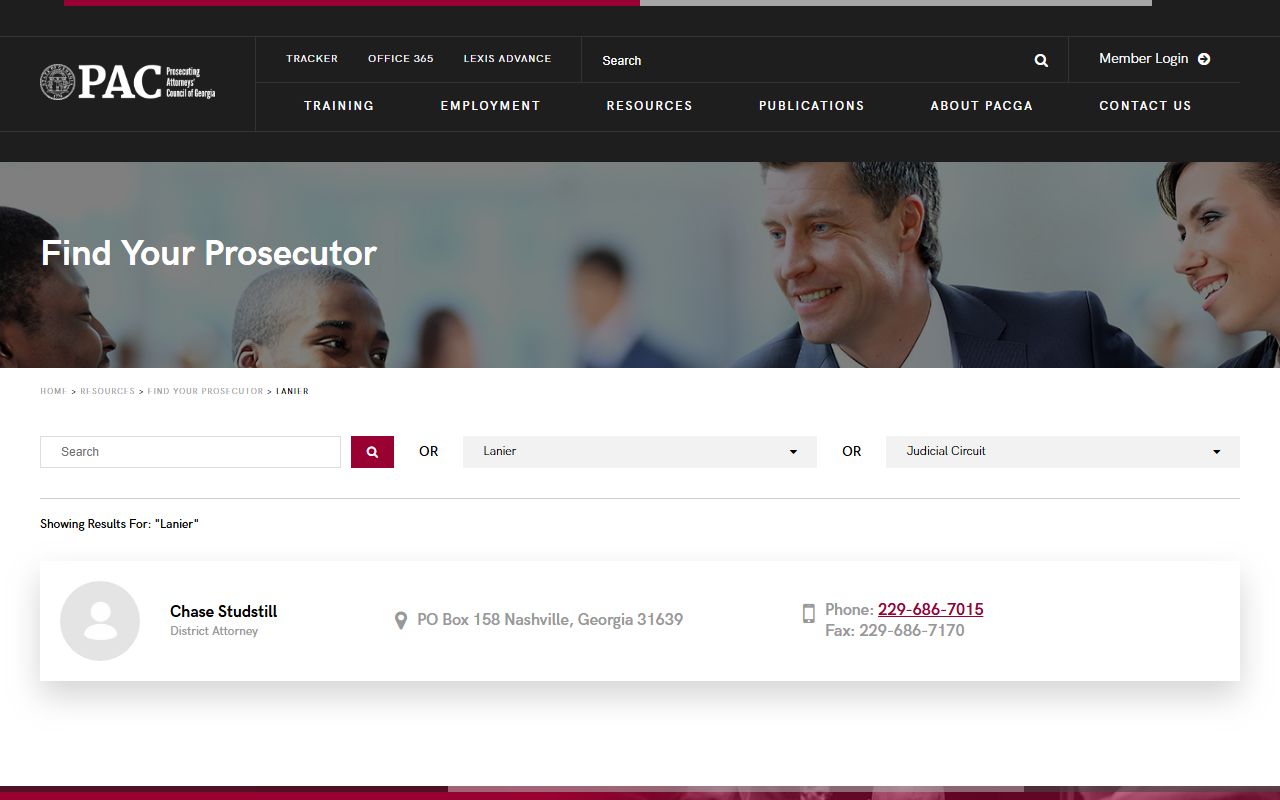
For record restriction questions, the prosecutor may be part of the process, but certified court documents still route through the court custodian.
The Georgia Public Defender Council Lanier County page routes qualifying defendants to the Alapaha Circuit Public Defender. Research also found a current GPDC local-office page naming Gabriel Cason as Circuit Public Defender for the circuit.
Defense office information can help a party identify representation routes, but public defender files are not the same as public criminal court records.
Lanier County Charges vs Convictions
A charge is an accusation that begins or shapes a criminal case. A conviction is an outcome after a guilty plea, nolo contendere plea treated as a conviction consequence, or guilty verdict. A Lanier County criminal court record may show several charges with different results. One count can be dismissed while another count results in a plea. A charge can also be amended or reduced. Read the final disposition and sentence before treating a docket entry as a criminal history outcome.
| Charge | Conviction | |
|---|---|---|
| Meaning | An alleged offense filed by citation, accusation, indictment, warrant, or other charging route. | A final guilt outcome entered by plea or verdict. |
| Record stage | Appears near the start of the court case and may change before disposition. | Appears at disposition and sentencing after the court accepts or enters the result. |
| Lanier County source | May appear in Sheriff's records, Magistrate preliminary records, traffic records, or Superior Court filings. | Shown in the criminal court file, sentence, GCIC records, or Georgia Felon Search where eligible and public. |
| Risk of misread | Can be dropped, dismissed, amended, reduced, or not prosecuted. | Can still be subject to appeal, restriction, sealing, or later court action where law allows. |
Read Lanier County Sentences
Disposition and sentence fields are the parts of a criminal court record that explain how the case ended. Disposition can mean guilty, not guilty, dismissed, nolle prosequi, reduced, amended, transferred, or otherwise resolved. Sentence can include jail, prison, probation, fines, court costs, restitution, treatment, community service, license consequences, or other conditions. Probation and restitution terms may appear in orders or separate documents rather than in a short docket entry.
Lanier County criminal court users should also separate court sentences from jail custody and state offender data. The court sentence may order confinement, but current custody questions go through the Sheriff's Office/Jail or, after state transfer, the Georgia Department of Corrections. Georgia Felon Search and GCIC systems are conviction or criminal-history tools. They are not a replacement for the full Lanier County criminal court file, and they may exclude sealed, restricted, juvenile, or misdemeanor records depending on the tool.
Sealed and Restricted Criminal Records
Georgia commonly uses the term record restriction for limiting public access to eligible criminal history information. The O.C.G.A. 35-3-37 restriction statute and the GBI record restriction page explain the broad process. For arrests after July 1, 2013, the GBI guidance says there is no application process through the arresting agency and the person must contact the prosecutor. For arrests before July 1, 2013, the person applies through the arresting agency. Approved requests must be submitted to GCIC so the arrest is restricted from the public record.
| Sealed Court Record | Restricted Criminal History | |
|---|---|---|
| What changes | Court access is limited by law or court order. | Eligible criminal history is limited from non-criminal-justice public access. |
| Who may still see it | Authorized parties, agencies, attorneys, or users allowed by the order or law. | Criminal justice agencies may retain access even when public checks do not show the record. |
| Lanier route | Ask the court or Clerk of Superior Court whether a sealing order applies to the court file. | Contact the prosecutor for many post-2013 arrests or the arresting agency for older arrests. |
| Common mistake | Assuming a restricted GCIC record automatically removes every court document. | Assuming a dismissed charge disappears without the required approval and submission steps. |
The Georgia Crime Information Center page describes state criminal history databases and services connected to charge tracking and dispositions.
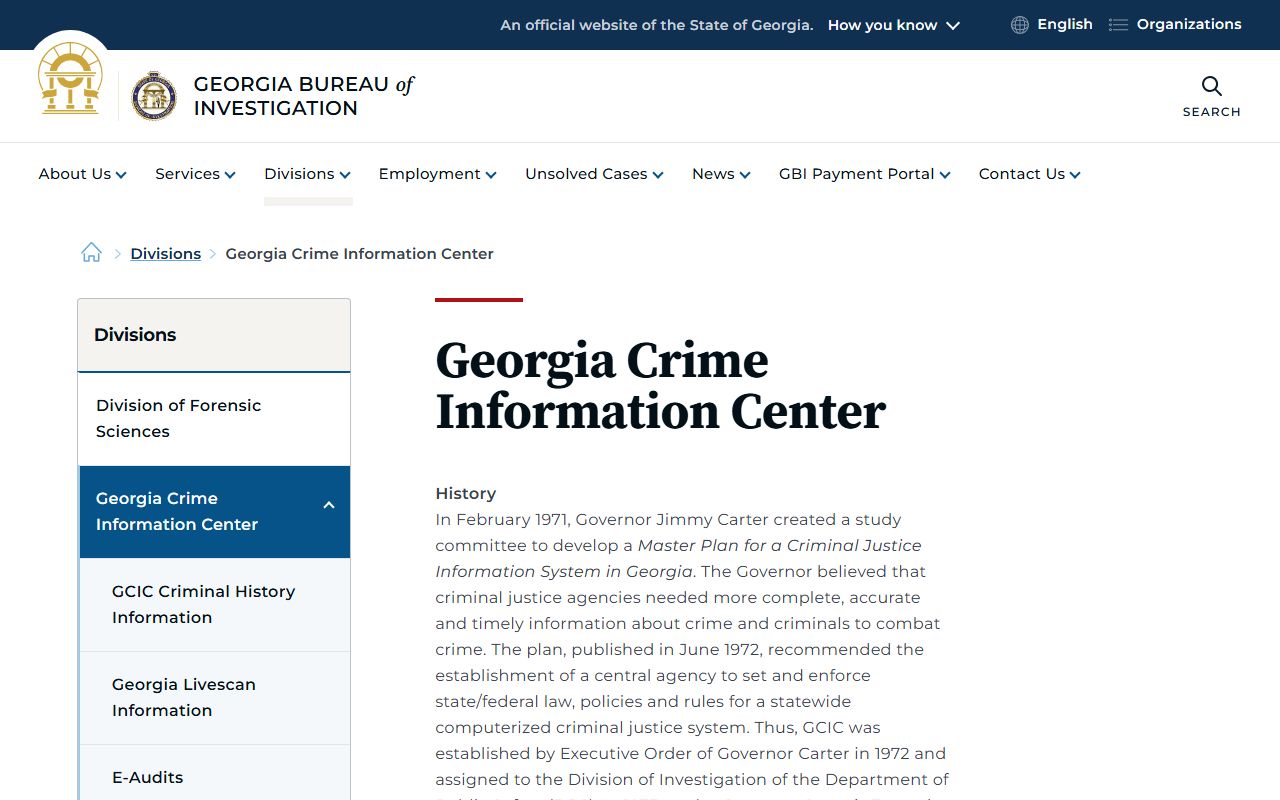
GCIC records can help with criminal-history routing, but a court-file restriction question should still be checked with the court.
Lanier County Criminal Record Access
Adult criminal court files are generally public unless a law, court order, or rule limits access. Uniform Superior Court Rule 21 states the Superior Court record is public unless access is limited by law or court order. The Georgia Open Records Act supports public inspection and copying of public records unless an exemption applies. Criminal court access in Lanier County still depends on the exact file, court, age, and restriction status.
Restricted categories include Juvenile Court matters, sealed cases, record-restricted criminal history, personal identifiers, mental health material, and protected victim or minor information. A pending criminal investigation may also limit access to certain law-enforcement records. If the request concerns a Sheriff's incident, arrest report, accident report, or jail record, use Sheriff Nick Norton's open-records process rather than the Clerk's court-file process.
Important: Criminal court record searches should not be used for FCRA-regulated screening unless the source and use comply with law.
Request Lanier Criminal Case Copies
For a Superior Court criminal case file, contact the Lanier County Clerk of Superior Court. The GSCCCA directory lists Patricia L. Bass as Clerk of Superior Court at 56 W. Main St., Suite 5, Lakeland, Georgia 31635, phone (229) 482-3594, fax (229) 482-8333, with office hours from 8:00 a.m. to noon and 1:00 p.m. to 5:00 p.m. Monday through Friday. Provide the defendant name, case number if known, charge or offense date if known, and the exact document requested.
For Magistrate preliminary criminal proceedings, warrant applications, or deposit account fraud docket material, use Magistrate Court at 56 W. Main Street, Suite 10, phone (229) 482-2207, or the Georgia Magistrate Records modules where Lanier is listed. For traffic criminal matters handled by Probate Court, use records@lanierprobatecourt.gov or the traffic records request process. For arrest, booking, jail, or incident records, use the Sheriff's ORA form and records@lanierso.com. Each office can release only public records within its custody.