
Lanier County Arrest Records and Court Charges
Arrest records in Lanier County start with the law enforcement event. The Lanier County Sheriff's Office, led by Sheriff Nick Norton, is the local office tied to jail custody, incident records, accident records, civil paper service, courtroom security, warrants, and judicial orders. The Sheriff's Office lists its records custodian process for incident and accident records and maintains an arrest reports page with a PDF download area. Those sources are different from a court case file, even when the same arrest later becomes a criminal case.
Court charges after arrest are the formal allegations tracked by a court. In Lanier County, Magistrate Court may handle warrant applications and preliminary criminal proceedings, while Superior Court handles felony prosecutions and other criminal cases filed through the Alapaha Judicial Circuit. District Attorney Chase Studstill prosecutes offenses in Superior Court for the circuit. The full criminal case file, including pleas, motions, sentencing, and disposition, belongs with criminal court records; custody and booking questions belong with inmate records.
The Lanier Sheriff's Office open-records page explains the local request path for reports held by the Sheriff's Office.
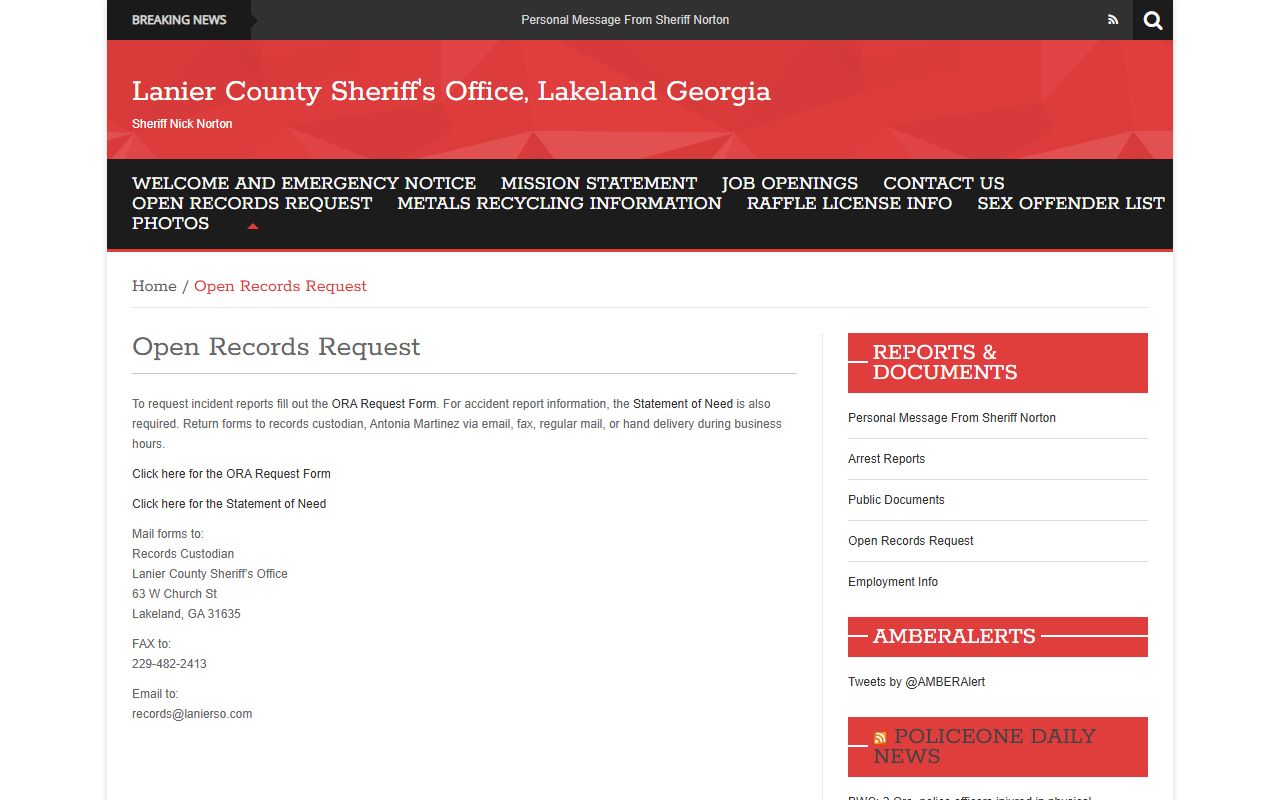
That request channel matters when the arrest detail is not available through a public court portal or when the requester needs the law enforcement report rather than the court charge entry.
Find Lanier County Arrest Records
There is no single Lanier County search box that reliably combines booking records, Sheriff's reports, Magistrate warrant records, Superior Court criminal charges, and state criminal-history information. Start with the record type. For a posted arrest report or incident report, use the Sheriff's Office. For current custody, call the Lanier County Jail or use the jail process described on the inmate page. For formal charges, look for the court file through the Clerk of Superior Court, the Magistrate Court channel, or a statewide Georgia court-access provider when available.
- Check whether the question is about a booking, an incident report, a warrant, a pending charge, or a final disposition.
- Use the Sheriff's arrest reports page or ORA Request Form for arrest-report records held by the Sheriff's Office.
- For Magistrate Court preliminary matters, contact the Lanier Magistrate Court at 56 W. Main Street, Suite 10, Lakeland, or use the official Georgia Magistrate Records modules where Lanier is listed.
- For Superior Court charges, request the case file or certified copies from the Clerk of Superior Court, and use Superior Court routing for felony case records.
- For statewide conviction checks, use Georgia Felon Search or GBI/GCIC resources, understanding that these are not substitutes for local court files.
The Lanier Sheriff's Office arrest reports page is the local place to check for posted arrest-report PDFs before making a formal records request.
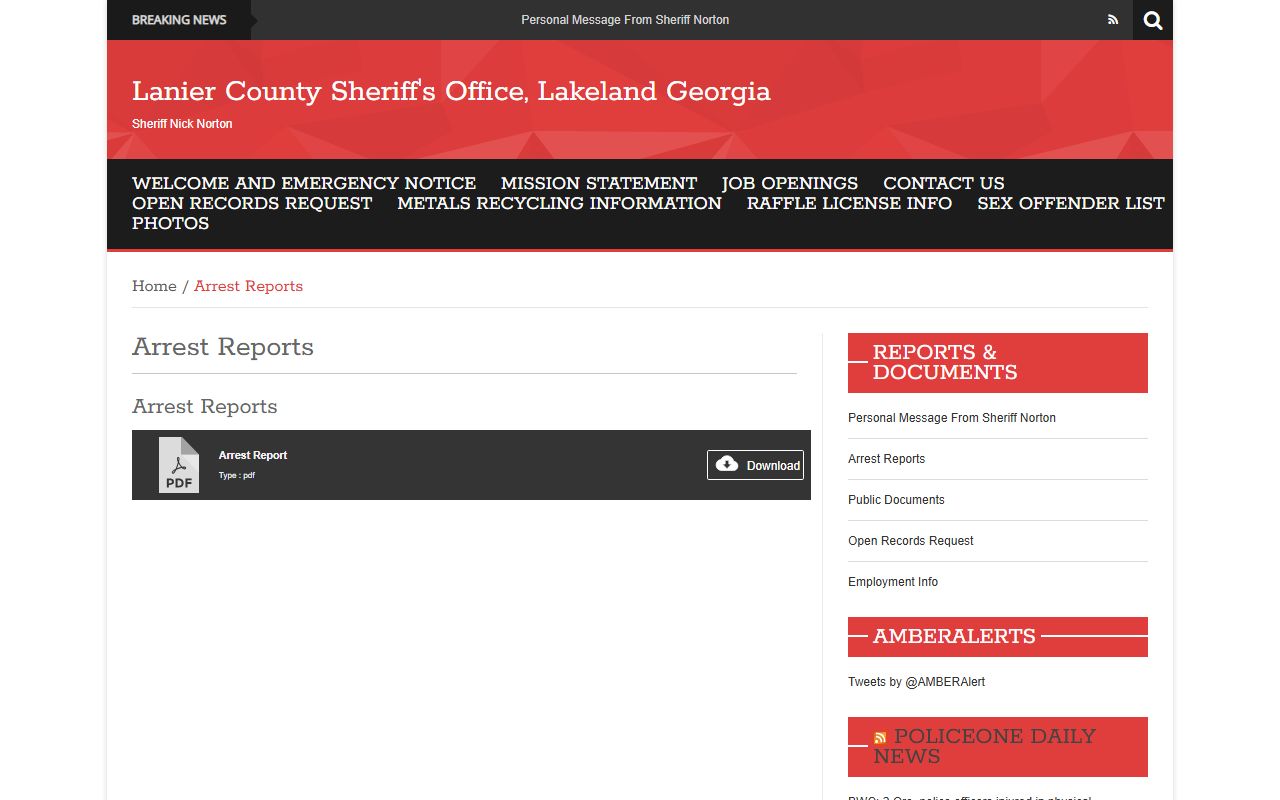
When a posted report is not enough, the Sheriff's ORA process asks requesters to identify the record precisely so the office can estimate retrieval or preparation costs.
Charges After Arrest in Lanier County
A charge record can begin with booking information, a citation, a warrant, or a preliminary court appearance, but the court charge becomes more formal when the prosecutor files or pursues a charging document. Georgia research for Lanier County identifies indictments and accusations as common criminal court records. Felony prosecutions in Superior Court are handled by the District Attorney for the Alapaha Judicial Circuit. Magistrate Court may appear earlier in the pathway because its jurisdiction includes warrant applications and preliminary criminal proceedings.
| Document or Event | Where It May Appear | What It Means |
|---|---|---|
| Booking or arrest report | Sheriff's Office or Jail | Law enforcement record of the arrest event, agency, date, and reported charge information. |
| Warrant or preliminary matter | Magistrate Court or Sheriff's warrant processing | Early judicial paperwork tied to probable cause, appearance, or warrant execution. |
| Accusation | Superior Court criminal file | Prosecutor-filed charging document used in Georgia criminal practice. |
| Indictment | Superior Court criminal file | Grand-jury charging document, commonly associated with felony prosecution. |
The charge listed at booking may not be the final charge prosecuted in court. Charges can be amended, reduced, dismissed, or replaced by later filings. A careful record check compares the Sheriff's information, the Magistrate or warrant record, and the Superior Court case file before treating a charge as current.
Charge Status and Disposition
Lanier County charge records may show a charge text, statute reference, offense date, court date, bond entry, docket entry, or disposition. The most important distinction is timing. A pending charge is an allegation still moving through court. A dismissed charge is no longer being pursued in that case. A conviction requires a guilty plea, nolo contendere plea accepted as a conviction consequence, or a verdict. A sentence, probation term, restitution order, or commitment follows only after conviction or adjudication.
| Status | What It Means |
|---|---|
| Pending | The charge has not reached final disposition in the court file. |
| Amended or reduced | The prosecutor or court record shows a changed charge, count, level, or wording. |
| Dismissed | The charge was ended without a conviction on that count. |
| Nolle prosequi | The prosecutor elected not to proceed on the charge, subject to Georgia criminal procedure. |
For a complete outcome, use the criminal case file rather than only the arrest report. A law enforcement report can show why a person was arrested, but the docket and court orders show what happened to each count after filing.
Charges vs Convictions
Being arrested or charged is not the same thing as being convicted. Lanier County records may show an arrest, a booking, a warrant, a charge, a plea, and a final disposition as separate events. Background checks and casual searches often blur those terms, but court users should read each count independently and confirm the final court action with the custodian before relying on it.
| Charge | Conviction | |
|---|---|---|
| Stage | Allegation filed or tracked after arrest | Final guilt finding, plea, or verdict on a count |
| Where to verify | Sheriff, Magistrate, or court charge entry | Superior Court or other court disposition record |
| Effect | Can be pending, amended, or dismissed | Can support sentencing, probation, restitution, or state criminal-history reporting |
The Georgia Felon Search page describes an instant GCIC felony-conviction check, which is narrower than a Lanier County arrest-record search.
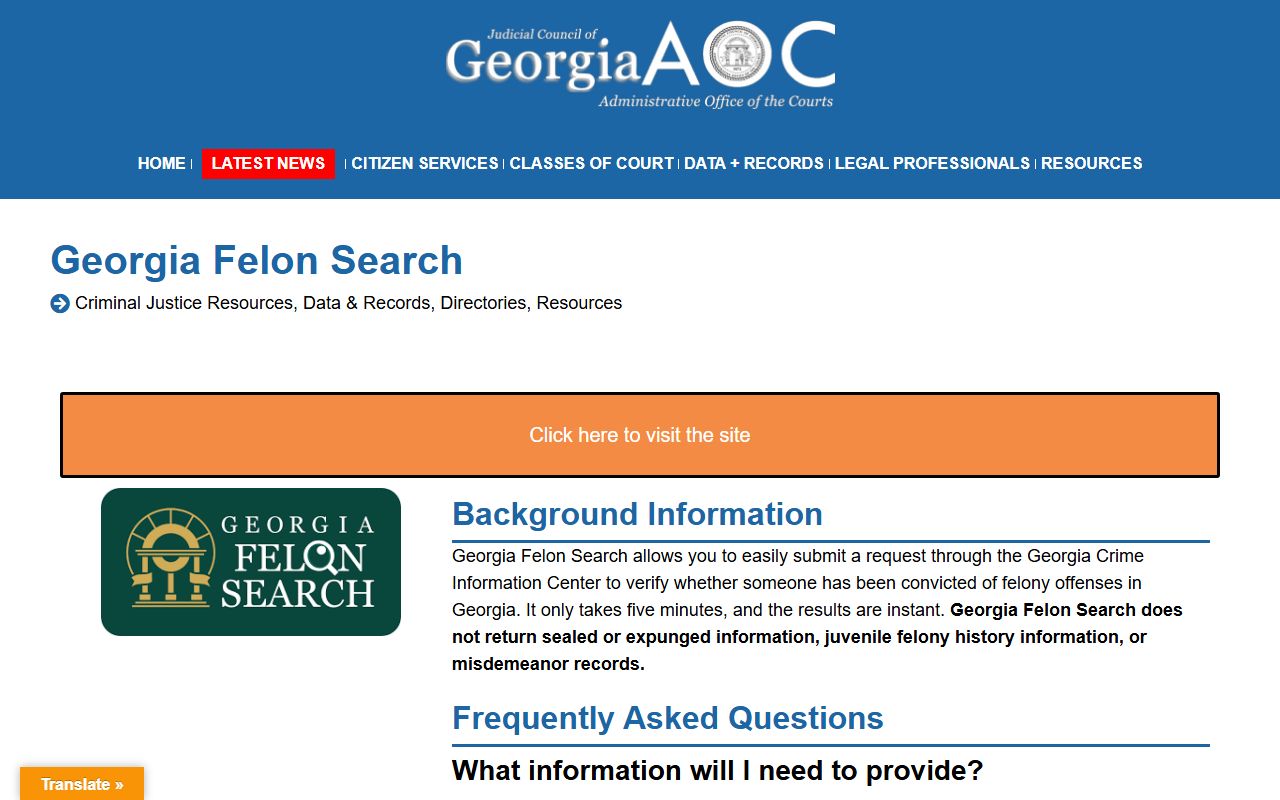
Use that statewide conviction tool only for the purpose it serves: checking reported Georgia felony convictions, not replacing local arrest reports or court-case documents.
Restricted and Sealed Charge Records
Georgia commonly uses the term record restriction rather than expungement for many criminal-history access limits. The GBI explains that O.C.G.A. 35-3-37 controls restriction of certain criminal history records for non-criminal-justice purposes. For arrests after July 1, 2013, the GBI guidance says there is no arresting-agency application process and the person must contact the prosecutor. For arrests before that date, the person generally applies through the arresting agency. Court records may require separate court action if the court file itself remains public.
| Restricted | Sealed | |
|---|---|---|
| Visibility | Limited from ordinary public or non-criminal-justice access when approved | Limited by court order or law for the court file or document |
| Who may still see it | Criminal justice agencies may retain access | Authorized parties, agencies, or a court may retain access |
| Lanier routing | Prosecutor or arresting agency, depending on arrest date and eligibility | The court that controls the file or order |
The GBI criminal history record restrictions page explains the Georgia restriction process and prosecutor routing under O.C.G.A. 35-3-37.
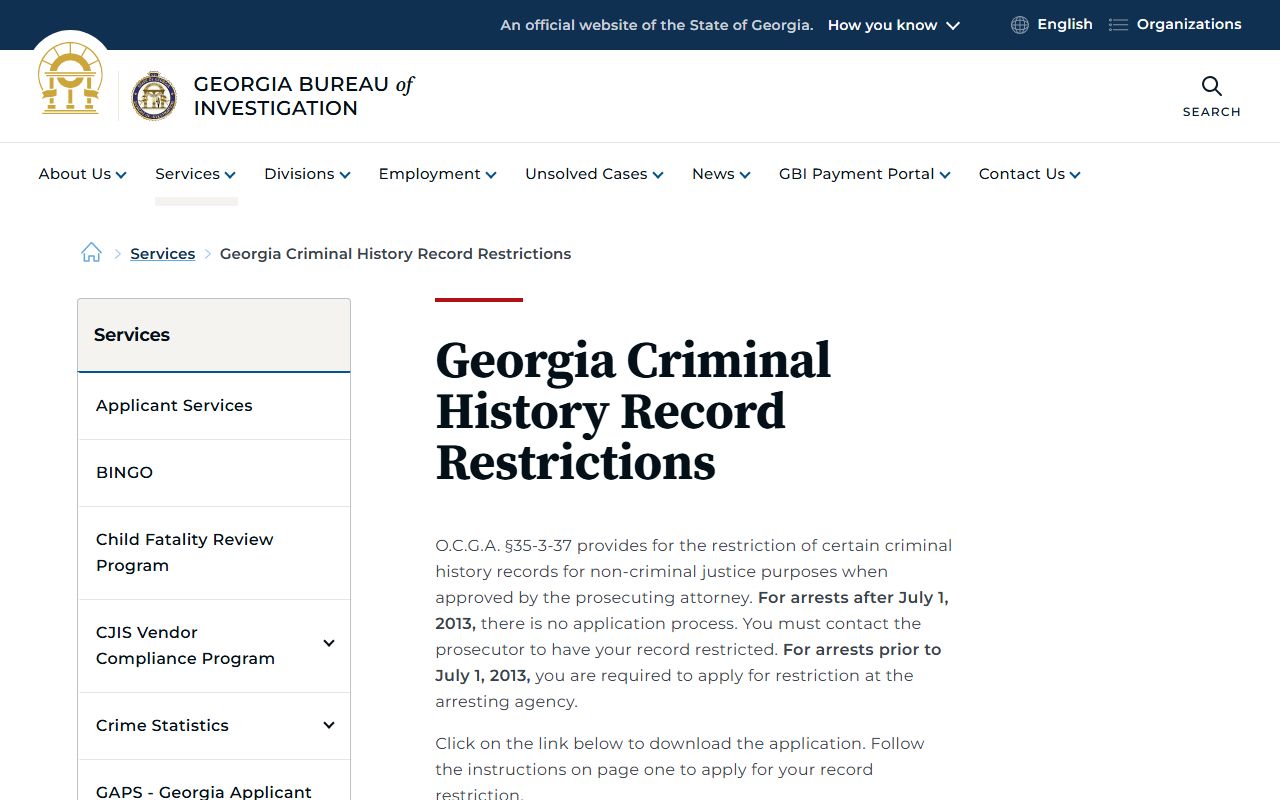
That state guidance is especially relevant in Lanier County because the District Attorney's Office controls many post-2013 restriction decisions rather than the Sheriff's records counter.
Lanier Charge Fields
A Lanier County charge entry may include the defendant name, arresting agency, offense date, warrant number, booking number, bond, court date, statute, charge wording, and court division. Superior Court records may add indictment or accusation details, plea, sentencing, probation, restitution, and appeal notices. Magistrate records may expose offense date and court date fields for ordinance or deposit account fraud matters. The Sheriff's ORA form asks for enough detail to identify the requested record, so names, dates, case numbers, report numbers, and a precise description reduce delay and cost.
The O.C.G.A. 35-3-37 text is a useful legal source when a charge record may be eligible for Georgia restriction.
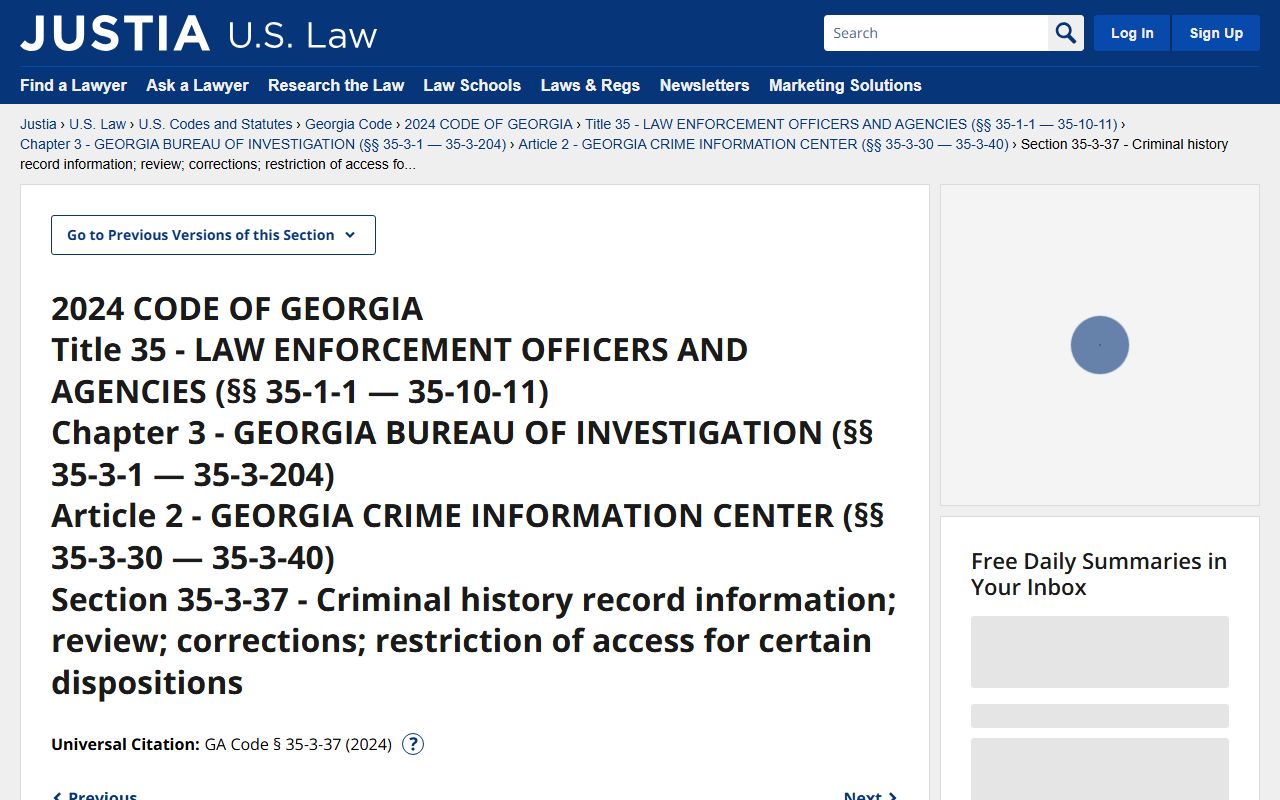
The statute does not make every arrest disappear from every file; it sets eligibility and routing rules that must be applied to the specific charge history.
State Criminal History Checks
Statewide criminal-history resources answer a different question than local Lanier County arrest records. The Georgia Crime Information Center maintains criminal-history databases that may include charge tracking, prosecutor dispositions, mug shots, and related services. Georgia Felon Search offers instant felony-conviction checks from GCIC data. Those state tools can help verify reported convictions, but they do not replace local court files, Sheriff's arrest reports, or certified documents from the Clerk of Superior Court.
When a person needs a certified charge outcome, the court custodian is still the safer source. For Superior Court charges, that means the Clerk of Superior Court. For Probate or Magistrate records, use the records request form or linked portals. For Sheriff's records, use the Sheriff's ORA channel. Georgia public-record access does not guarantee that every record is online, free, unredacted, or available to every requester.
Background Check Considerations
Lanier County arrest records can be incomplete if read without the matching court disposition. A background-check user may see an arrest or charge that later changed, was dismissed, or became eligible for restriction. Georgia public records may also omit juvenile information, sealed records, personal identifiers, protected victim data, or active investigative material. Always verify with the originating office before treating an arrest entry as the final court result.
Important: Do not use casual public-record searches for credit, employment, tenant, insurance, or other FCRA-regulated decisions.
Restricted Lanier County Charge Records
Some Lanier County charge records are restricted by law, court order, or practical access limits. Juvenile records are not ordinary public case files. Sealed criminal records, restricted criminal-history entries, adoption-related material, mental health proceedings, and records containing Social Security numbers or financial account data may be withheld or redacted. Active search warrants and active investigative records may also be withheld for safety or investigative reasons.
A person seeking restriction should identify the arrest date, agency, charge, case number, prosecutor, and final disposition before asking an office to act. For post-July 1, 2013 arrests, GBI guidance points the person to the prosecutor. In Lanier County Superior Court matters, that means the Alapaha Judicial Circuit District Attorney. For older arrests, the arresting agency process may be involved. For court-file sealing, confirm with the court that holds the case.